WE INSIST UPON YOUR DIGNITY
We are witnessing the collapse of human dignity as a public virtue. Will we defend the intrinsic worth of every human life — or surrender to the whims of power and cruelty?

By Stephan and Belinda Bauman
Greetings friends. What follows is the first in a series grappling with the gathering threat against human dignity. Maybe, like us, your emotions have ranged from outrage to lament to exhaustion as you consider the injustice of our day. In conversation with friends and through prayer, we keep coming back to this question: What kind of people do we want to be in this world? We would love to hear your thoughts. Where do you resonate? Where do you disagree? Where do you find hope?
Here is the road map for the series:
Part Three: How to Humanize (Coming Soon!)
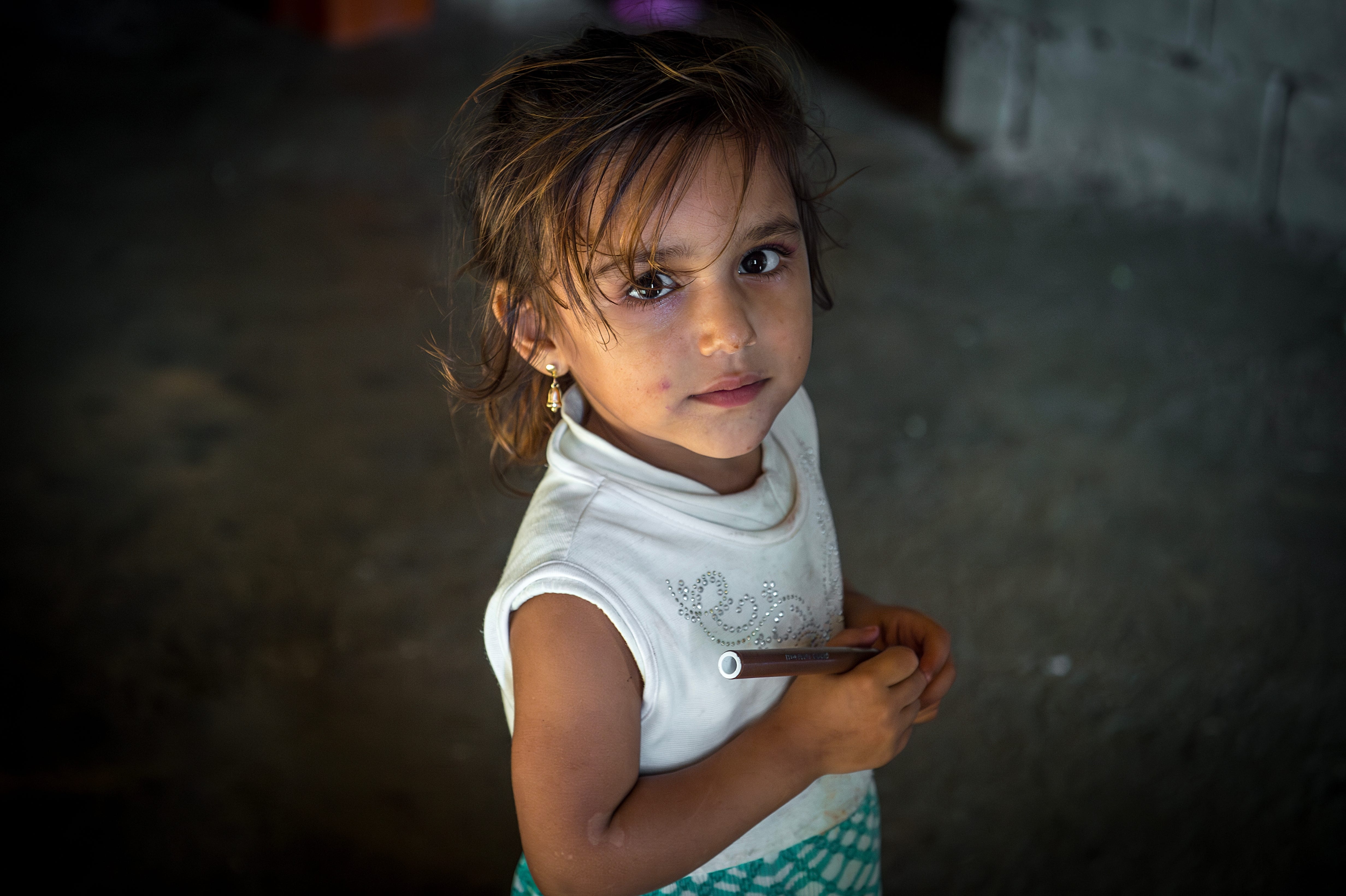
Once in a while, a story cracks open the world just long enough to let the light in.
During the peak of Israel’s aerial assault on Lebanon, Sumeya and her husband, Omar, bundled their three young children onto a borrowed motorcycle and drove ten hours north to flee the bombs that had killed more than a thousand people and displaced over a million. Originally from Sudan, Sumeya and her family, who are Muslim, found solace in an unlikely place: St. Joseph’s Church in Beirut. Safe for the first time since the war began, Sumeya dressed her kids in their best T-shirts and smoothed oil across their young faces to celebrate Eid, the holiday marking the end of Ramadan.
St. Joseph’s Church opened its doors to people fleeing violence just after the war began. Nearly 200 people — originally from countries like Sudan, Sri Lanka, Bangladesh, Ethiopia, and Sierra Leone — found refuge in a literal sanctuary. The decision to open the church, according to Michael Petro, a director with the Jesuit Refugee Service, was an act of love.
Why is the welcome of a Muslim family by a Christian church in a Middle Eastern country torn apart by violence so stunning?
Maybe because Sumeya’s story stands in such sharp contrast to our normal:
As powerful leaders threaten annihilation, bomb water supplies, and deploy dangerous chemicals, a little-known church in Beirut is saying, “Your life matters.”
While hate crimes have increased by more than eighty percent,1 and two out of three Americans consider “the other side” to be “less than fully human,” with nearly half saying they are “downright evil,”2 our friends in Lebanon are saying, “You are not the enemy.”
As some faith communities decide who God loves and hates, declaring who’s in and who’s out, a community across the world is saying, “You are welcome.”
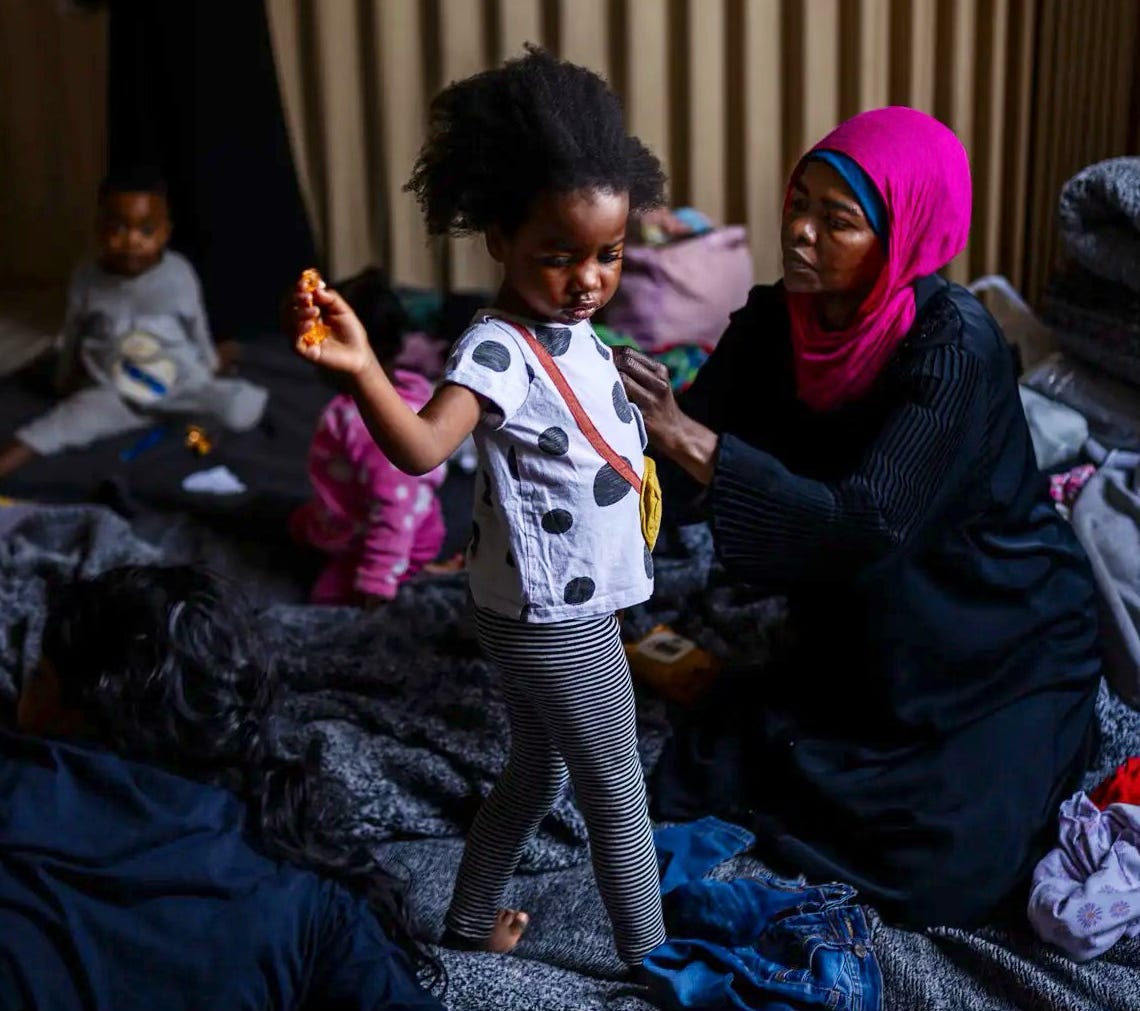
There are other stunning stories too — Thimar, for example, who is supporting displaced families in Lebanon. Or, our Congolese friend, Marcel, who is tackling trauma in Goma. Or the brave souls who are volunteering to help their neighbors survive the Ebola crisis in Congo.
Youth-led networks in Sudan are drawing on their deep-rooted culture of mutual aid — known locally as nafir — to mobilize healthcare, food, and protection in a war that has left millions fighting for survival.
Teachers, small business owners, and stay-at-home parents in cities across the United States have been walking immigrant children to school to protect them from ICE.3
We need to lean into love because the conditions for it are eroding fast.
The people behind these stories insist their response is human, not heroic — they are simply honoring the dignity of their neighbors. “Don’t call me a saint,” said Dorothy Day. “I don’t want to be dismissed that easily.” She’s right — relegating some people to heroism can give the rest of us a pass.
Sinners or saints, heroic or humble, we need to lean into love because the conditions for it are eroding fast. Empathy is waning across the world as narcissism surges.
But behind these troubling trends lies something even more dangerous.
THE ROOT OF ALL THAT IS WRONG IN THE WORLD
We began chasing justice in our mid-twenties when we volunteered on a hospital ship in West Africa. What started as six months turned into six years, and then a lifetime. With the help of friends around the world, we sought to be present to some of the worst crises — the Balkans, Rwanda, Congo, Haiti. Silence in the face of human tragedy was rare then. We believed that if people knew, they would care.
For us, it became a formula of sorts. We invited friends into the lives of people across the world, to the city next door, or the neighborhood down the road. People came together to listen. Fear gave way to friendship. In the words of Simone Weil, loving our neighbor “in all its fullness” often meant simply asking, “What are you going through?” Many experienced personal change, sometimes profound change. Love won. Empathy worked.4
Do you remember the days after the murder of George Floyd in 2020? Two thirds of our country supported ending racial discrimination against Black people. Compassion was tangible, and visible. Change felt possible.
But it was quickly politicized and short-lived.
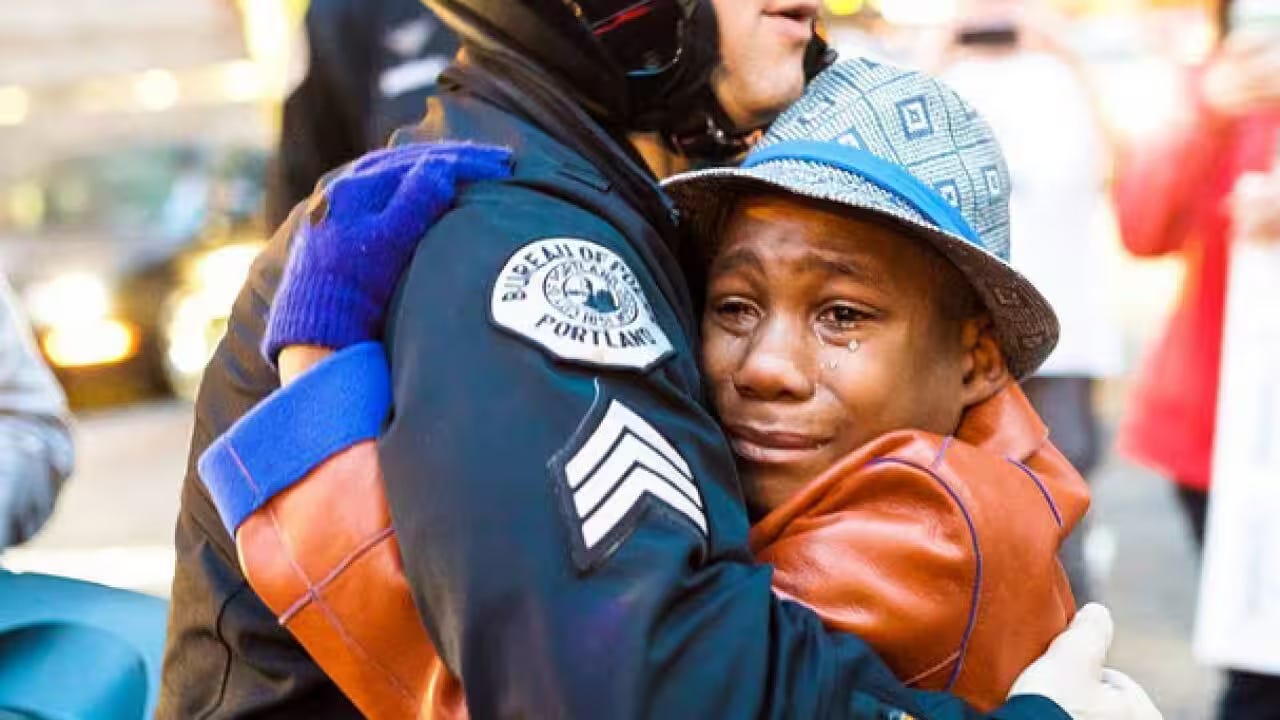
Are we witnessing the collapse of a deeply held conviction that has defined us for generations?
Today, compassion and empathy are “in danger of disappearing,” a warning that comes as some are calling empathy “the fundamental weakness of Western civilization,” while others are demonizing it outright, calling empathy a sin.
But there is a deeper crisis driving the decline.5 Millions have embraced the lie that some lives matter more than others, what Paul Farmer, the Harvard physician and humanitarian pioneer, called “the root of all that is wrong with the world.” The idea that some people are inherently good and others evil is tearing us apart. It gives permission to, and fuels, dehumanization, expressed through a range of behaviors like apathy and cruelty, racism and hatred, coercion and violence.
All this leads us to ask an essential question: Are we witnessing the collapse of a deeply held conviction that has defined us for generations — the principle that human dignity belongs to all people, regardless of origin, legal status, or behavior?
THE ASSAULT ON HUMAN DIGNITY
People who wield significant power today are attempting to relocate human worth away from its source in God and base it, instead, on proximity to power, perceived usefulness — to a nation, corporation, or technology — or conformity to a dominant group.
Elon Musk, for example, describes humanity as a “biological bootloader for digital superintelligence' — a species whose only function, in his view, is to serve technology. For Musk, human life has no value in itself. Its worth is exhausted once its shelf life expires.
Peter Thiel, the venture capitalist whose protégés now populate the upper reaches of power, believes freedom is the unimpeded prerogative of the capable, and is incompatible with democracy.
Stephen Miller, Deputy Chief of Staff at the White House, says we live in a world “governed by strength [and] by force,” where power constitutes reality and is the final arbiter of human worth.
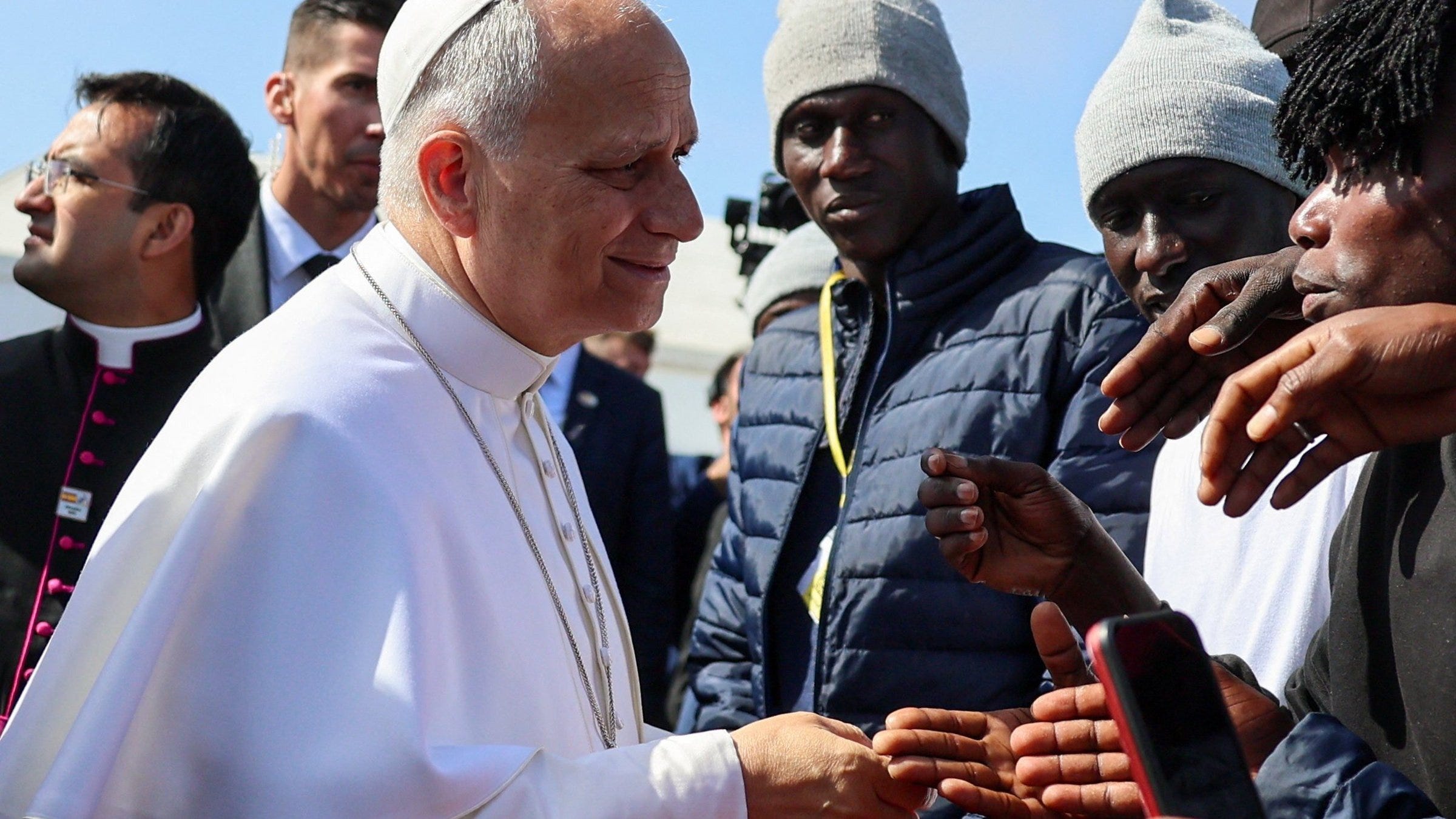
Pope Leo disagrees. In his new encyclical, Magnifica Humanitas (“Magnificent Humanity”), Leo presents an ancient claim which is suddenly radical again: every human being is created in the image of God — the Imago Dei — and therefore human dignity “does not depend on a person’s abilities, wealth or position in life, nor on right or wrong choices made.” Instead, dignity is a gift that precedes and transcends each person. Worth belongs to every human being “simply by virtue of existing,” which no sin, failure, humiliation, or exclusion can diminish (§50-53).
The most insidious ideology undermining human dignity, according to Leo, is one that suggests “that every person must earn or justify his or her own worth,” where people are “reduced to a means of achieving results, a resource to be used and exploited” (§51).
Pope Leo describes how dignity could be stripped from the vulnerable:
“If the human being is treated as something to be perfected or surpassed, it becomes easier to accept that some lives are less useful, less desirable or less worthy. In the name of progress, ‘necessary sacrifices’ may be justified, placing the burden on the most vulnerable in pursuit of a supposed optimization of the species” (§117).
Of course, none of this is new. Throughout much of history, human worth was understood almost entirely through the lens of power. Everyone existed in a descending hierarchy of worth measured by closeness to, usefulness to, and favor from the emperor or king. Human dignity belonged only to a special few — the elite. Women, slaves, and the vulnerable were treated as property.
When we abandon the human worth of some people, we abandon the human worth of all people.
Perspectives on human dignity aren’t just ideas for debate. In the United States today, coercive force is justified by appealing to certain ends — protection against a manufactured threat, for example, or preservation of “our way of life.” Religion is often manipulated toward some virtuous end, dividing people even more.
Labeling people as subhuman not only gives permission to dehumanize, but incites people to nefarious action. "I don't know if you call them people," said the American President at his campaign rallies, predicting a "bloodbath" if he were to lose the election. For some, dehumanizing people — and ridding the country of their perceived danger — can become a misguided mantra or twisted call of duty.
Human dignity is under assault today. When we abandon the human worth of some people, we abandon the human worth of all people. Today it may be immigrants or Iranians or Palestinians. Tomorrow it may be your neighbor or friend, a sister or brother, or your son or daughter.
But it is not only politicians, media personalities, and leaders who are to blame. The fault “is not in our stars, but in ourselves,” said Cassius in Shakespeare’s Julius Caesar. We have reason to hope. Our only mistake would be to ignore what could be the most dangerous threat to human dignity in a generation.
“Violence is not completely fatal,” said Thomas Merton, the influential Trappist monk, “until it ceases to disturb us.”6
Continued in our second post, which you can find here.
While the FBI’s transition to a different system complicates year-over-year comparison after 2021, the trend since 2015 is nonetheless upward by a wide margin, and these figures reflect only reported crimes, which systematically undercount. (Federal Bureau of Investigation (FBI), Hate Crime Statistics, 2023 and 2024 releases. See also, “Cause for Concern 2024” The State of Hate,” The Leadership Conference Education Fund, online: https://civilrights.org/edfund/resource/2024-state-of-hate/.)
“Nearly half” is the aggregate, but the distribution is sharply asymmetric: three-quarters of Republicans who believe Trump won in 2020 agreed Democrats are “downright evil,” versus only 27% of Republicans who accept that Biden won, while fewer than half of Democrats said the same of Republicans (https://phys.org/news/2024-10-americans-members-opposing-political-party.html).
ICE is the acronym for the U.S. Immigration and Customs Enforcement, the largest branch of the Department of Homeland Security.
The English word empathy, meaning literally “in-feeling,” was coined in 1908. Some have argued that empathy is not a biblical word. In our article, When Did Empathy Become a Sin?, we argue that empathy is, in fact, a distinctly biblical concept as demonstrated by Jesus — including, no less, through the incarnation — and a hallmark of those who follow his example.
A 2011 meta-analysis found a roughly 40 percent decline in empathic concern and perspective-taking among American college students between 1979 and 2009, a trend echoed by studies globally. An update study in 2018 found that empathic concern and perspective-taking have actually risen since 2009. However, the demographic was limited to American college freshmen, and the data rests on self-reporting and show a statistically weaker rebound for empathic concern than for perspective-taking. (Sara Hope Konrath, Alison Jane Martingano, Mark Davis, and Fritz Breithaupt, “Empathy Trends in American Youth Between 1979 and 2018: An Update,” Social Psychological and Personality Science 16, no. 3 (2025): 252–265, updating Sara H. Konrath, Edward H. O’Brien, and Courtney Hsing, “Changes in Dispositional Empathy in American College Students Over Time: A Meta-Analysis,” Personality and Social Psychology Review 15, no. 2 (2011): 180–198.)
Thomas Merton, Thoughts in Solitude (New York: Farrar, Straus and Giroux, 1958), 129.
Thank you so much for this post. There are so many of us Jesus followers in this same place of struggle. I am so thankful to have found you both through the Justice Conferences years ago, and really admire you standing for what is right.
The question of "what kind of people do we want be in this world" has not resonated with me. Im about to turn 58 and one of the joys of my age is the sense that I have mostly figured out the kind of person I want to be in this world. Of course learning is a lifelong endeavor - to some extent I hope Im always discovering who I want to be and I throw no shade on people who are still on the journey of discovery. My real challenge is actually being the person I want to be in this world. "To be rather than to seem", in the face of what feels like the daily beat down. The person I have decided I want to be wrestles everyday between the status quo of daily routine and the words and actions of intentional love that sometimes seem hard to drum up the energy for. Overcoming the discouragement and be the person I want to be. The value of this new community for me is the reminder and the challenge to be rather than to seem. Thank you for that.